
What’s With All the W’s? Meet Some of Berman’s New Upper School Teachers
January 22, 2026
By Rimonne Zakheim ’28
It’s almost suspicious how four of Berman’s new Upper School hires all happen to have last names beginning with the letter W: Waxman, Weiss, Wilson, and Witztum. You’d think that shared initial might reveal some kind of unifying theme, but honestly, it doesn’t. These teachers come from completely different worlds: one was a national-level gymnast, another played keyboard in a rock band, one trained Google’s language models, and another was kicked out of Jewish day school. Still, when you talk to them, a few funny parallels pop up — multiple years in yeshiva, more British accents than expected, and an unusual amount of musical talent. Together, the W’s bring a quirky, thoughtful, and genuinely refreshing layer to Berman’s culture.
 Vice Principal Rabbi Waxman didn’t begin his career in a Beit Midrash — he began it in advertising. For 10 years, he worked as an art director in some of the U.K.’s top agencies, and on the side he played keyboard in a jazz-rock band, which automatically makes him cooler than most teachers you meet. But at 29, after what he calls a spiritual awakening, he left clients and commercials behind and spent five years learning in Jerusalem and South Africa, eventually receiving semicha. He realized he no longer wanted a job that required being “fully immersed in popular culture,” and stepped into teaching instead — a job he assumed he’d try temporarily but ended up doing for nearly 25 years.
Before Berman, he taught at King David in Manchester and King Solomon in London, both strong Modern Orthodox schools, but said they didn’t have the parent and student culture he found here. Now, as both a Chumash teacher and assistant principal, he teaches with an exploratory style: the curriculum provides structure, but the real learning happens together through debates, questions, and chavruta. His goal isn’t for students to memorize information but to feel the excitement of discovering how much more there is beneath the surface. “We’ve only touched the surface,” he says. “There’s so much more to go.” Outside the classroom, he stays active — literally. He uses the Berman gym, paints (he even has a website of his art), plays piano, and is writing a book. Apparently, being a musician is a theme among the W’s.
 Mr. Weiss’s path into education started far earlier — and far messier — than most teachers would admit. Growing up in Boston, he got kicked out of his Jewish day school in sixth grade. Instead of pushing him away from education, that experience did the opposite: it made him determined to build the kind of learning environment he wished he’d had — one rooted in belonging instead of fear. After college and graduate school in New York, he lived in Israel for two years and eventually cycled between Washington, D.C., Minnesota, and back to D.C. again, teaching in Modern Orthodox schools the entire way. Relationship-building is the core of his teaching: he believes nothing meaningful happens until a student feels safe, seen, and genuinely understood. In his ESS classroom, trust isn’t a side element, it’s the entire strategy. Once that trust forms, he says, students work more independently, ask better questions, and aren’t afraid to admit when they’re struggling.
“I want [students] to remember how we had fun,” he says, something he sees as essential, not optional. In case his personality is not already clear, his ketubah includes a legally binding addendum granting him one full week off of household responsibilities every time a new Zelda game is released. He has only had to use it once. Outside of school, he loves video games, landscaping, and especially long road trips; his favorite was driving the entire length of Route 66 in a sports car with his father-in-law. Above all, he wants students to walk away remembering how his class felt: welcoming and fun.
 For Mr. Witztum — who teaches math, engineering, science, and Judaics — his journey to Berman began in London, wound through Israeli yeshivot, passed through Florida, and ultimately led him to the classroom, all guided by a lifelong pull toward learning.
He grew up in the U.K. until age eighteen, then spent five years studying in yeshiva in Israel while his family relocated to the United States. When he eventually joined them in Florida, he pursued both a bachelor’s and master’s degree in engineering, a field he chose for its logic and precision. In reality, he says, “I’ve kind of always wanted to teach.” After working in industry, he found that engineering didn’t offer the meaning or connection he was looking for. Teaching did.
Witztum describes education through a beautiful metaphor from Chazal: before birth, a malach (angel) taps us on the lips, causing us to forget what we once knew. To him, learning isn’t about transferring information, but is instead about helping students remember what’s already inside them. That perspective shapes his entire approach: “Learning is a lifelong endeavor,” he says. “It’s okay to make mistakes and [when you do you] persevere.” Although he teaches both Judaic and secular subjects, he sees them as unified by the same goal—building thinkers who are curious, resilient, and not afraid of difficult material. And yes, he’s also the former national-level gymnast in the group, having ranked 30th in the U.K. at age nine. Outside of school he enjoys soccer, singing, and the quieter pace of night; he proudly identifies as a night owl, which rounds out the W group as the only one who prefers late hours over early mornings.
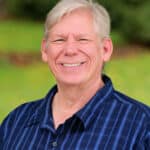 Dr. Wilson’s résumé is so unexpected that it reads like three different careers stacked into one. He began as both an English literature and music major, fields that shaped the artistic and analytical lens he brings into the classroom. His early teaching years took him through Virginia, Pittsburgh Public Schools, and eventually Carroll and Montgomery counties, where he taught middle school, high school, and even college composition while finishing his master’s degree. After retiring from public school teaching, he shifted into a completely different world: IT. During the pandemic, he helped validate NIH’s clinical management systems, a role that put him at the intersection of health care, data, and logistics. “It was nice to have a small part in ensuring the clinical trials went well,” he says.
He then worked for Google on projects training large language models—yes, the very early ancestors of the AI systems that now dominate headlines. His job was to teach robots how to write ethically and clearly, something he jokes was “really hard and unsatisfying,” realizing he’d “rather teach people—people are far more wonderful to teach.” When that contract ended, he applied widely but felt an immediate pull toward Berman after his demo lesson; the sense of kindness, commitment, and community stood out instantly.
His teaching style in his English classes blends cognitive science with compassion: he focuses on how the brain processes reading and writing and uses strategy-based instruction to make difficult tasks more manageable. He is also a “fierce believer in second-chance learning—if there’s a concept a student didn’t understand or they didn’t do well on an assessment, I’m open to them trying it again,” and insists that students grow at their own pace rather than on a rigid timeline.
Outside of school, he is deeply rooted in music—particularly Irish traditional music and jazz. He accompanies vocalists, has a SoundCloud that’s all Irish music, and is happiest sitting in a pub somewhere in Ireland, playing tunes late into the night. If he weren’t a teacher, he’d be a full-time musician, which fits seamlessly with the unofficial pattern among the W’s: they all have at least one unexpected creative talent.
Put all four together, and you get a faculty group that somehow makes perfect sense despite having little in common on paper. They each bring different backgrounds, passions, and personalities, but share a quiet thread: a belief in curiosity, kindness, resilience, and the idea that every student can grow. Whether through music, years in yeshiva, road trips, gymnastics, or robot ethics, each W teacher adds something new to the school. If nothing else, Berman can now claim the most eclectic, entertaining, and musically gifted collection of W’s in any Upper School hallway.